We also speak Hindi
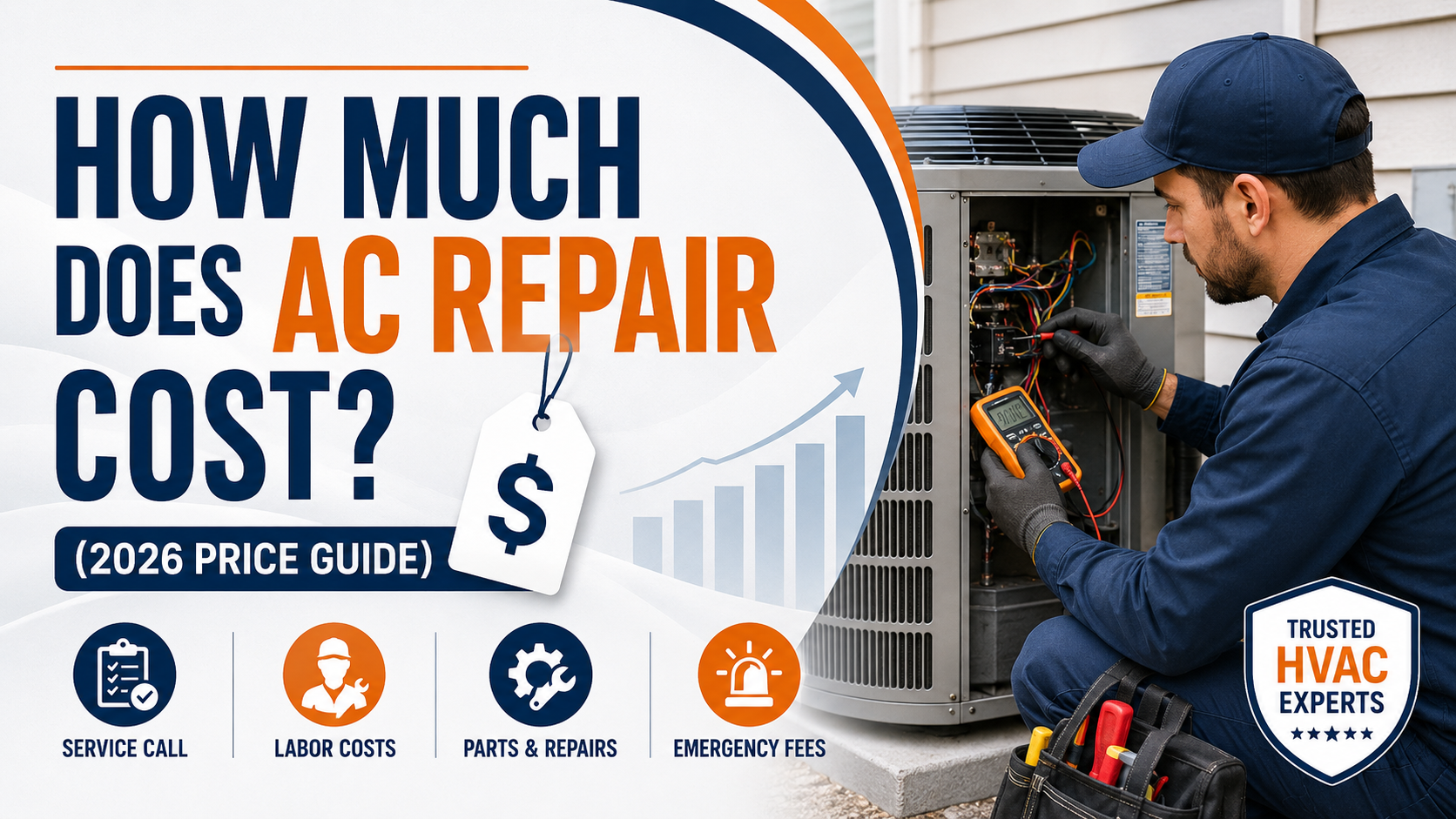
How Much Does AC Repair Cost? (2026 Price Guide)
May 14, 2026
Most AC repairs cost between $150 and $700, with the average homeowner paying around $350. Large or complex air conditioner repairs cost $650 to $2,500+, and a failed compressor or evaporator coil can push the total past $3,000. Most companies charge a diagnostic fee between $89 and $200, which is often applied toward the repair if you proceed with service.
Below is a clear breakdown by repair type, the factors that move your price up or down, and a simple rule for deciding whether to repair or replace.
Average AC Repair Cost at a Glance
- Typical repair range: $150 – $700
- National average: about $350
- Full range (minor to major): $100 – $3,000+
- Diagnostic/service call fee: $75 – $200 (often credited toward the repair)
- Labor rate: AC technicians charge $75 to $150 per hour for labor
The single biggest factor is which part failed. A worn capacitor is a cheap, 20-minute fix; a compressor replacement is a major job that often costs as much as a new outdoor unit.
AC Repair Cost by Part
Here’s what you can expect to pay for the most common air conditioner repairs, including parts and labor.
- Capacitor: $150 – $300 — the most common and most affordable repair. A $20 part and 20 minutes of labor restore cooling for $200 to $300.
- Contactor: $150 – $350 — an electrical switch that wears out over time.
- Thermostat replacement: under $200 for most standard models.
- Refrigerant leak repair: $200 to $1,500 to find and fix the leak and refill the refrigerant. A leak detection test costs $100 to $330.
- Refrigerant recharge: $100 to $320 on average for AC units with R410A refrigerant, or $180 to $600 for older units using R22.
- Condenser fan motor: roughly $300 – $600.
- Blower motor: $500 – $1,200.
- Evaporator coil replacement: $1,000 to $2,500 if the part is under warranty, or $2,500 to $4,500 total if it is not under warranty.
- Compressor replacement: $1,000 – $2,500+, and on some systems higher. This is the most expensive common repair.
Tip: A refrigerant “top-off” is never routine. An AC unit should never need a refrigerant refill — the only time it’s necessary is after a leak is fixed or when a major repair requires the system to be opened. If a technician wants to add refrigerant without finding a leak, ask questions.
What Affects Your AC Repair Cost
Two homeowners with the same broken part can pay very different prices. Here’s why:
- The failed component. Electrical parts are cheap; sealed-system parts (compressor, coils) are expensive.
- Labor time. Repairs can take as little as 1 hour or up to 8 hours — flushing a drain line takes under an hour, while a coil or compressor replacement may take a full day.
- Parts and warranty status. A part still under manufacturer warranty dramatically lowers your bill.
- System accessibility. Rooftop or tightly enclosed units cost more to reach and service.
- Season and timing. An emergency surcharge runs 50% to 100% above the scheduled rate. The same capacitor swapped on a calm spring morning is far cheaper than during a midsummer heat wave.
- Refrigerant type. Older R22 systems cost more to recharge than modern R410A units.
- Your location. Demand in hot, high-cost regions raises both labor and emergency pricing.
Repair or Replace? A Simple Rule
Before approving an expensive repair, weigh it against a new system:
- The 50% rule: It’s better to replace your unit if repair costs will be 50% or more of the cost of a new AC unit.
- Factor in age: An air conditioner lasts 12 to 15 years on average if properly maintained. A pricey repair on a 12-year-old system rarely pays off.
- Watch the compressor math: A $1,200 to $2,500 compressor replacement on a 12-year-old system is roughly half the cost of a new outdoor unit and carries no warranty on the remaining components. At that point, replacement usually wins.
Repair if the unit is under ~8 years old, the fix is minor, and the system is otherwise reliable. Replace if the unit is 10+ years old, the repair is major, and you’ve had repeat breakdowns.
How to Avoid Overpaying for AC Repair
- Get a written, itemized estimate with separate lines for parts and labor before any work starts.
- Ask if the diagnostic fee is credited toward the repair (most reputable companies do this).
- Don’t accept “full replacement” pitches before a complete inspection — that’s a red flag.
- Confirm licensing, insurance, and certifications for your area.
- Schedule maintenance in the off-season to dodge emergency surcharges.
- Get a second opinion on any repair quoted above $1,500.
Maintenance: The Cheapest Repair Is the One You Prevent
Routine upkeep is the best way to keep repair bills low.
- An annual maintenance visit costs $100–$200 on average and includes cleaning coils, checking refrigerant levels, testing electrical components, and lubricating moving parts.
- Keep at least two feet of clearance around the outdoor condenser.
- Rinse the condenser fins gently with a hose once or twice a season.
- Replace air filters every 1–3 months.
- Act early on warning signs — strange noises, weak airflow, short cycling, or ice on the refrigerant lines usually cost far less to fix before a full shutdown.
A trustworthy HVAC company will recommend the most cost-effective fix first, give you pricing in writing, and never pressure you into replacement before a proper diagnosis.
Frequently Asked Questions
Q: How much does it cost to fix an AC unit on average?
Most AC repairs cost $150 to $700, with a national average around $350. Minor fixes start near $100, while major component failures like a compressor or evaporator coil can exceed $3,000.
Q: Why is there a fee just to diagnose the problem?
Technicians charge a diagnostic or service-call fee, typically $75 to $200, to inspect and test your system. Most companies apply that fee toward the repair if you approve the work.
Q: What is the most common (and cheapest) AC repair?
A capacitor replacement. It’s the most frequent AC repair and usually costs $150 to $300 because the part is inexpensive and the job is quick.
Q: How much does it cost to recharge AC refrigerant?
A recharge runs about $100 to $320 for modern R410A systems and $180 to $600 for older R22 units. Remember that needing refrigerant means there’s a leak that should be repaired first.
Q: When should I replace my AC instead of repairing it? Replace it if the repair costs 50% or more of a new unit, or if the system is over 10 years old and facing a major repair like a compressor or coil. Otherwise, repair is usually the smarter choice.
Q: How can I lower my AC repair costs? Schedule service in the off-season to avoid emergency surcharges, keep up with annual maintenance, get itemized written quotes, and address small issues before they become major failures.
Latest
See All
May 29, 2026
Top 10 Underfloor Heating Repair Companies (2026 Guide)
May 20, 2026
Top Commercial AC Repair Companies in Illinois (2026 Guide)
May 14, 2026
How Much Does AC Repair Cost? (2026 Price Guide)
May 8, 2026
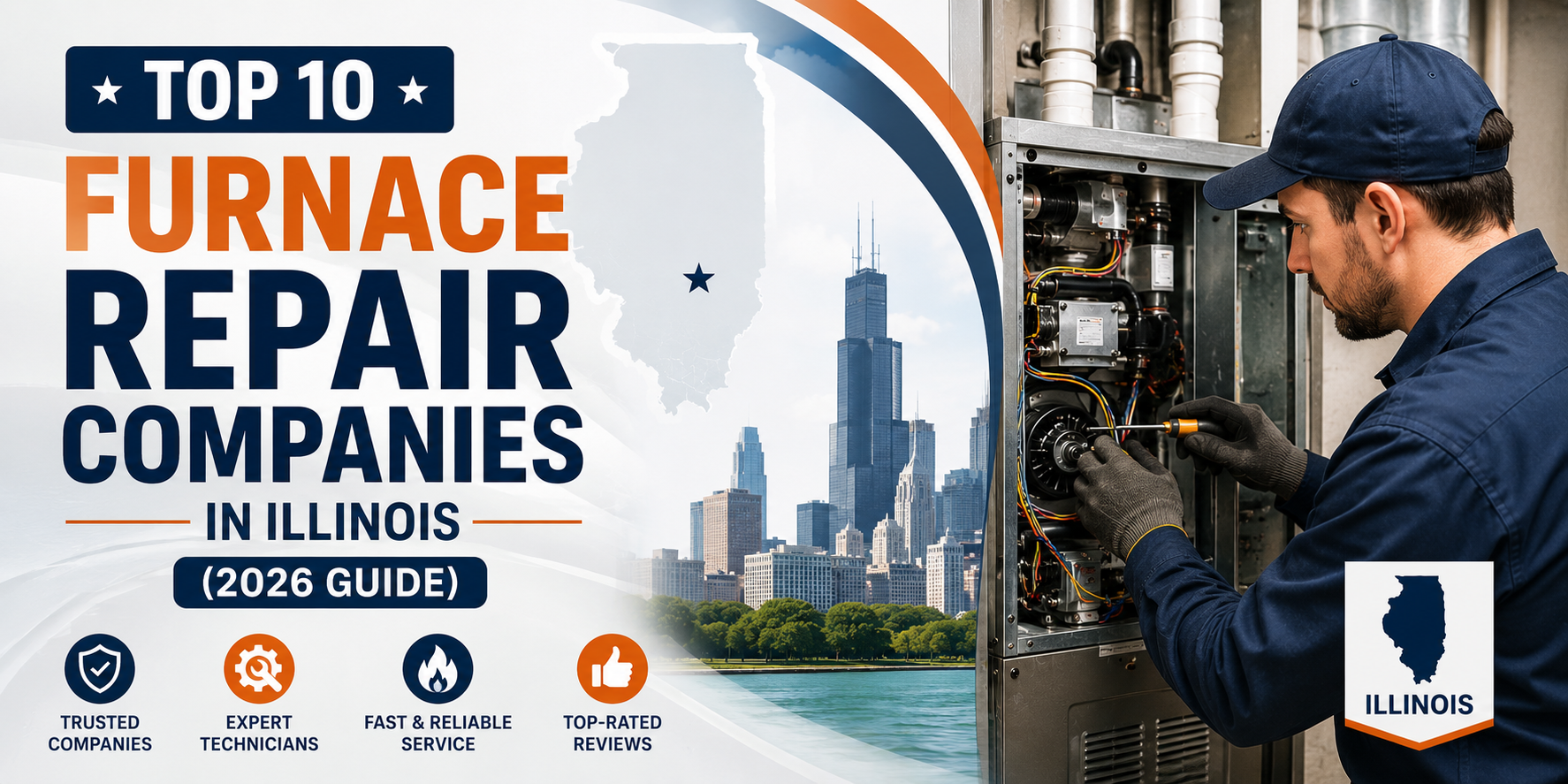
Top 10 Furnace Repair Companies in Illinois (2026 Guide)

February 12, 2026
10 Signs You Need to Repair Your Home Heating System in 2026
Featured Blog Posts
Top 10 Underfloor Heating Repair Companies (2026 Guide)
May 29, 2026
The best underfloor heating repair companies combine licensed technicians, experience with both electric and hydronic (water-based) systems, leak detection and
Read More
Top Commercial AC Repair Companies in Illinois (2026 Guide)
May 20, 2026
The best commercial AC repair companies in Illinois combine fast emergency response, licensed and insured mechanical technicians, experience with rooftop
Read More
How Much Does AC Repair Cost? (2026 Price Guide)
May 14, 2026
Most AC repairs cost between $150 and $700, with the average homeowner paying around $350. Large or complex air conditioner
Read More
Top 10 Furnace Repair Companies in Illinois (2026 Guide)
May 8, 2026
The top furnace repair companies in Illinois combine fast emergency response, licensed and certified technicians, upfront pricing, and strong local
Read More
Ready for 5- Star Service?
FAQs
Cities We Service
- Alsip
- Aurora
- Bartlett
- Batavia
- Bloomingdale
- Bolingbrook
- Burr Ridge
- Carol Stream
- Clarendon Hills
- Darien
- Downers Grove
- Frankfort
- Geneva
- Glen Elynn
- Glendale Heights
- Hanover Park
- Hinsdale
- Homer Glen
- Joliet
- Lisle
- Lombard
- Mokena
- Montgomery
- Naperville
- New Lenox
- North Aurora
- Oak Brook
- Oswego
- Plainfield
- Rolling Meadows
- Romeoville
- Schaumburg
- Shorewood
- St. Charles
- Streamwood
- Tinley Park
- Warrenville
- West Chicago
- Westmont
- Wheaton
- Willow Spring
- Willowbrook
- Woodridge
- Yorkville
Lorem ipsum dolor sit antor